Table of Contents
macrophotography for Micro Four Thirds cameras
see also:
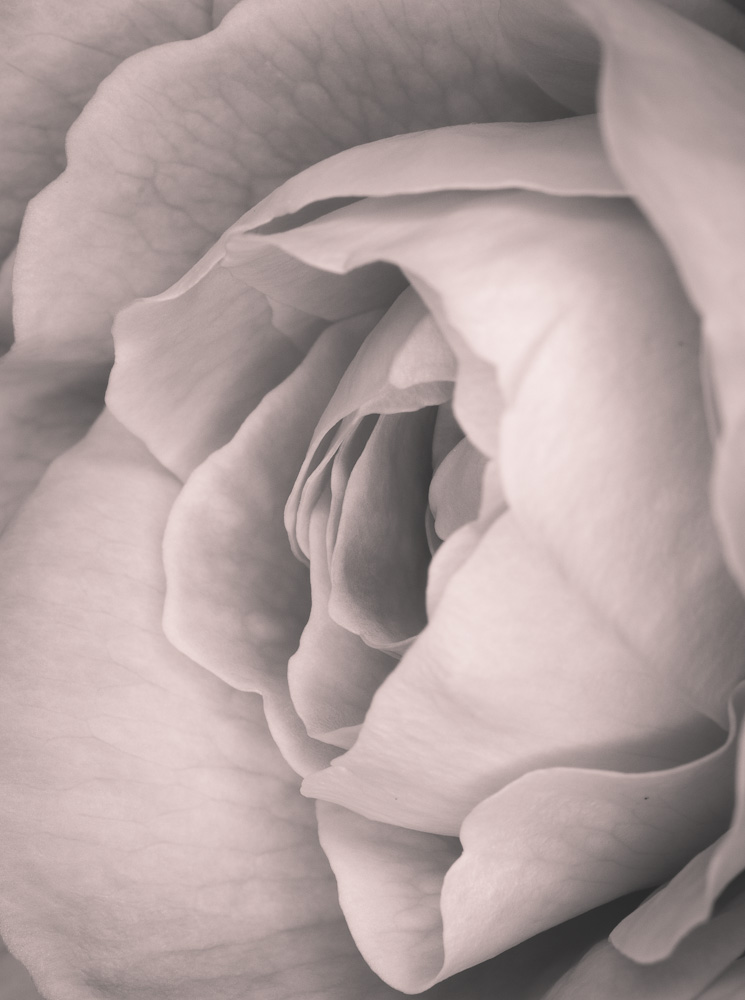
A small rose bud using Panasonic GH-1 with Olympus ZD 50mm f/2.0 macro and Canon Ring Flash
introduction
- mirrorless camera systems cameras such as Micro Four Thirds system have the potential to be the best camera options for micro or macro photography because:
- no mirror to cause camera shake which can be a real problem at high magnification photography such as 1:1 and higher
- no mirror to continuously have to move out of the way to allow accurate magnified live view manual focus (autofocus is rarely suitable to macrophotography and never to microphotography)
- flip out LCD screen so you don't have to bend down and look through a viewfinder
- almost any macro lens ever made can be adapted to work
- Olympus m.ZD 60mm f/2.8 macro lens is one of the best macro lenses ever made and has fast AF and nice focus limiters as well as being affordable and weatherproof
- a nice compromise on image quality, noise at higher ISO levels, camera and lens size (easier to use in the field without a tripod)
- image stabilisation potentially available with any lens (if you use an Olympus body), although IS is not usually as effective at macro magnifications although the new 5-axis 5EV IS of the Olympus OM-D E-M5 camera and later models should be handy!
- off-camera TTL flash options available (eg. Olympus Ring flash or Twin flash, or Metz Ring flash, etc)
- unfortunately, to date there is no Olympus macro ring flash which can act as a master to a slave background flash in TTL mode, although the Metz system may allow this
- the cropped sensor gives even greater magnification such that a 1:2 macro lens (eg. Olympus ZD 50mm f/2.0) covers the same subject area at closest focus as a 1:1 macro lens would do on a full frame dSLR.
- the smaller the sensor, the less magnification factor of the lens is needed for a given subject size
- there are a couple of downsides to the smaller sensor:
- more image noise at high ISO and slightly less dynamic range
- potentially less pixels
- cannot use f/ratio smaller than f/8 without starting to lose sharpness due to the physical laws of diffraction.
macro flash
- if the Olympus macro flash system cannot be attached to a lens, it can be hand held, or alternatively:
- can use Metz 15 MS-1 "ring" flash with another flash in the hotshoe as a master
- can use Canon “ring” flash via adapter tube, but in manual exposure mode only
- Olympus also have a cute tiny, cheap, twin flash for macro flash on Olympus Pen cameras.
macro extension tubes
- Kenko AF Extension Tube Set for Micro 4/3rds:
- 10mm and 16mm tubes with all the contacts and circuitry to maintain communication between the camera body and the lens.
- AF (within the limited macro range) and auto exposure are maintained, although with some lenses AF may not function.
- focal length of the lens should be longer than the focal length of the tube for proper operation.
- stacking of the tubes is not possible with the Panasonic 45MM Macro and PZ 45-175MM lenses, and potentially with other lenses.
AF macro lens options
- for outdoor work, my preference would be the Olympus 60mm macro
- if on a budget or you want higher magnification (mainly for indoor work), or, for underwater use, and don't mind losing a few features, then the Olympus 30mm macro is worth a look
- if you have Panasonic camera, then the Panasonic versions with OIS may be more attractive
Panasonic 30mm f/2.8 OIS 1:1 macro
- more affordable but no focus limiter switch
- not weathersealed
Panasonic Leica-D 45mm f/2.8 OIS 1:1 macro
- high quality 1:1 macro lens with optical image stabiliser
- IF, close focus 15cm, 225g, 63mm long, 46mm filter, focus limiter,
- cannot attach Olympus macro flash system but these can be used hand held
- see Photozone review
Olympus mZD 30mm f/3.5 macro
- close focus at 9.5cm giving macro to 1.25x (2.5x in full frame terms) and working distance of 14mm from end of lens, gives a field of view down to 13.9 x 10.9mm able to reveal subjects the unaided eye cannot see
- AF is 20-30% faster than Olympus m.ZD 60mm f/2.8 macro lens, and smaller, lighter, less expensive and with closer macro, but also shorter working distance and wider field of view and not weathersealed and no focus limiter
- compatible with auto focus stacking with certain cameras such as the E-M1
- $US299
Olympus M.ZD 60mm f/2.8 1:1 macro lens
- a very nice, compact, light, high image quality weatherproof lens
- fast, silent AF
- internal focus
- focal distance limiters improve AF performance
- adapter available for the Olympus macro flash system
- for most macro purposes, this is THE BEST lens for macro for MFT if you can afford it
- $US599
slow AF macro lens options
- ie. Four Thirds lenses adapted to Micro Four Thirds using the FT-MFT adapter
- AF may not be possible with older Panasonic cameras such as the GH-1
Olympus ZD 50mm f/2.0 macro lens
- professional level 1:2 macro
- slow AF but one of the sharpest lenses ever made
- 52mm filter thread
- adapter available for the Olympus macro flash system
- can use the superb Olympus EC-20 2x converter to double the magnification without shortening working distance
- ie. your subject area will be reduced to the sensor size (18x12mm) and thus 1:1 in technical terms but actually twice the magnification of a 1:1 macro lens on a full frame camera. It thus becomes equivalent to a 200mm f/4 2:1 macro lens on a full frame at less than half the weight and bulk of a Canon EF 180mm f/3.5L 1:1 macro lens.
Olympus ZD 35mm f/3.5 macro lens
- consumer level 1:1 macro
- Olympus macro flash system fits without an adapter
- see Photozone review
manual focus macro lenses
- almost any macro lens you would like to use on it!
How to shoot a 36x24mm subject
- the Olympus ZD 50mm f/2.0 macro at it's closest focus will achieve this magnification
- set your camera to manual focus
- turn the camera on
- rotate lens manual focus ring until it is at closest focus
- set exposure mode to manual or aperture priority
- set aperture to f/11 (perhaps f/16) for optimum compromise between depth of field and sharpness
- DOF = 3mm at f/8, 6mm at f/11 and 10mm at f/16 (DOF determined in practice viewing image at 8x on live view playback, thus DOF of 3mm means +/- 1.5mm either side of focus plane)
- move camera in and out until image looks almost in focus (this will be ~10cm from the front of lens to the subject - the “working distance”)
- repeat above in magnified live view until you have precise manual focus
if using available light
- set ISO to give an adequate shutter speed for correct exposure
- if using manual exposure you will need to manually set the shutter speed
- if hand held, at such high magnification, you will need a fast shutter - perhaps 1/250th sec or faster
if using ring flash attached to lens
- set ISO to 100-200 otherwise the ring flash even at its lowest output setting may be too bright at f/8
- as the ring flash to subject distance will always be constant for closest focus with this lens, you can use manual exposure on the flash so it decreases variability - typically with the above settings you will need to use 1/32nd or 1/64th flash output.
- flash output on Canon Ring flash at ISO 200: f/8 = 1/64th, f/11 = 1/32nd, f/16 = 1/16th
- once your exposure is close, you can then make fine adjustments to flash exposure by minor changes to ISO or aperture
- alternatively, you can use TTL flash but be aware if your subject fills only a small part of the frame, you are likely to get erroneous results which is why I prefer manual exposure flash.
set shutter speed for ambient background exposure
- having the shutter at flash sync of 1/160th or 1/180th sec (depending on model) will generally cause background to be very dark, even black unless it is in bright sunlight and a light color.
- to brighten the background you have several options including:
- increase shutter duration - this will not effect flash exposure but you may need a tripod to avoid blurring your subject!
- use another flash to expose the background
- ensure background is a light color and in bright sunlight (or use a reflector)
optionally, add a EC-20 2x teleconverter
- this gives you 2 main possibilities:
- allows double the magnification at closest focus so subject size to fill the frame will be only 18mm x 12mm
- allows same subject size but at approx. double the working distance of ~18cm instead of ~10cm.
- remember this doubles your effective f/stop.
- alternatively, one could add a Four Thirds 25mm extension tube to the Olympus ZD 50mm macro lens to double the magnification but your working distance will halve, while your effective f/stop still increases, and thus I find a 2x teleconverter much more versatile, and more expensive.