how to photograph a total eclipse of the moon (lunar eclipse / blood moon)
see also:
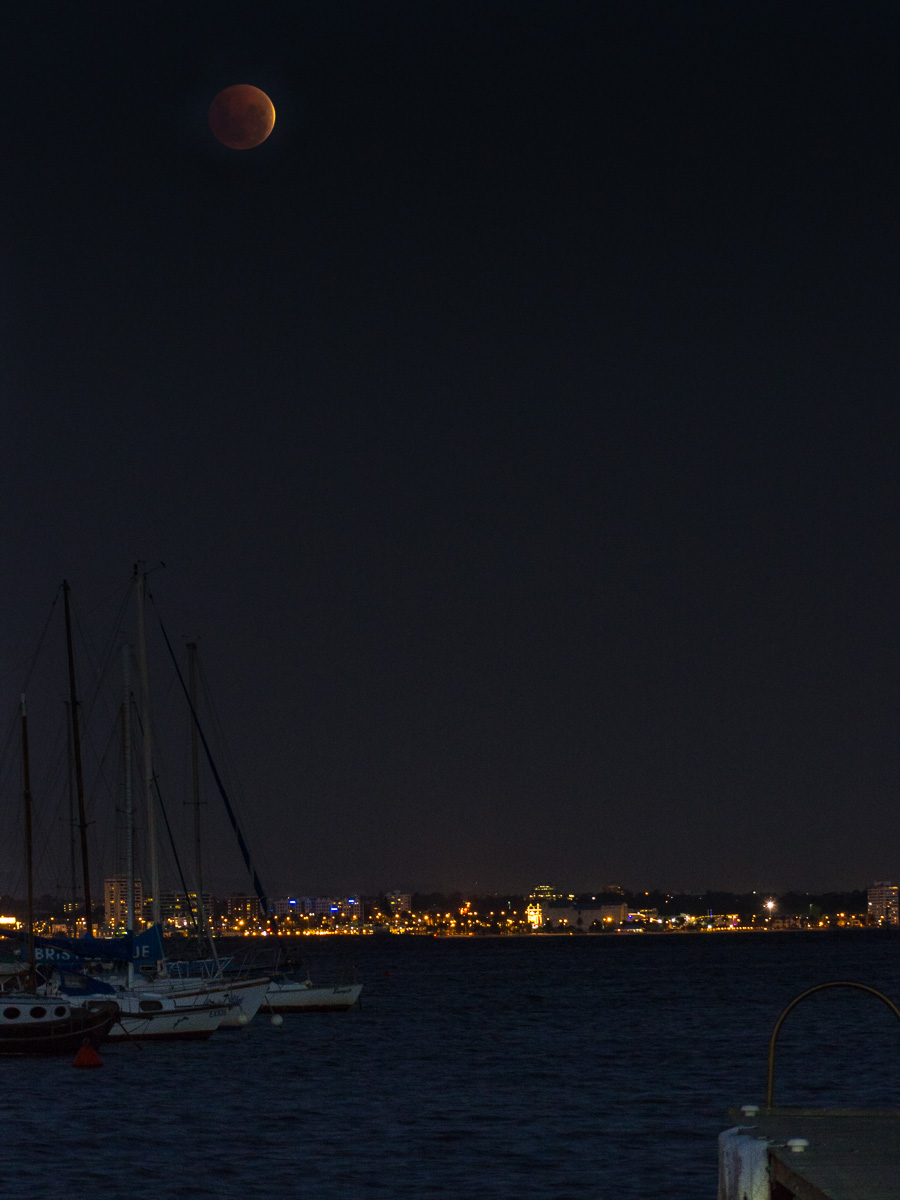
Lunar eclipse Melbourne April 2014 - see my blog post
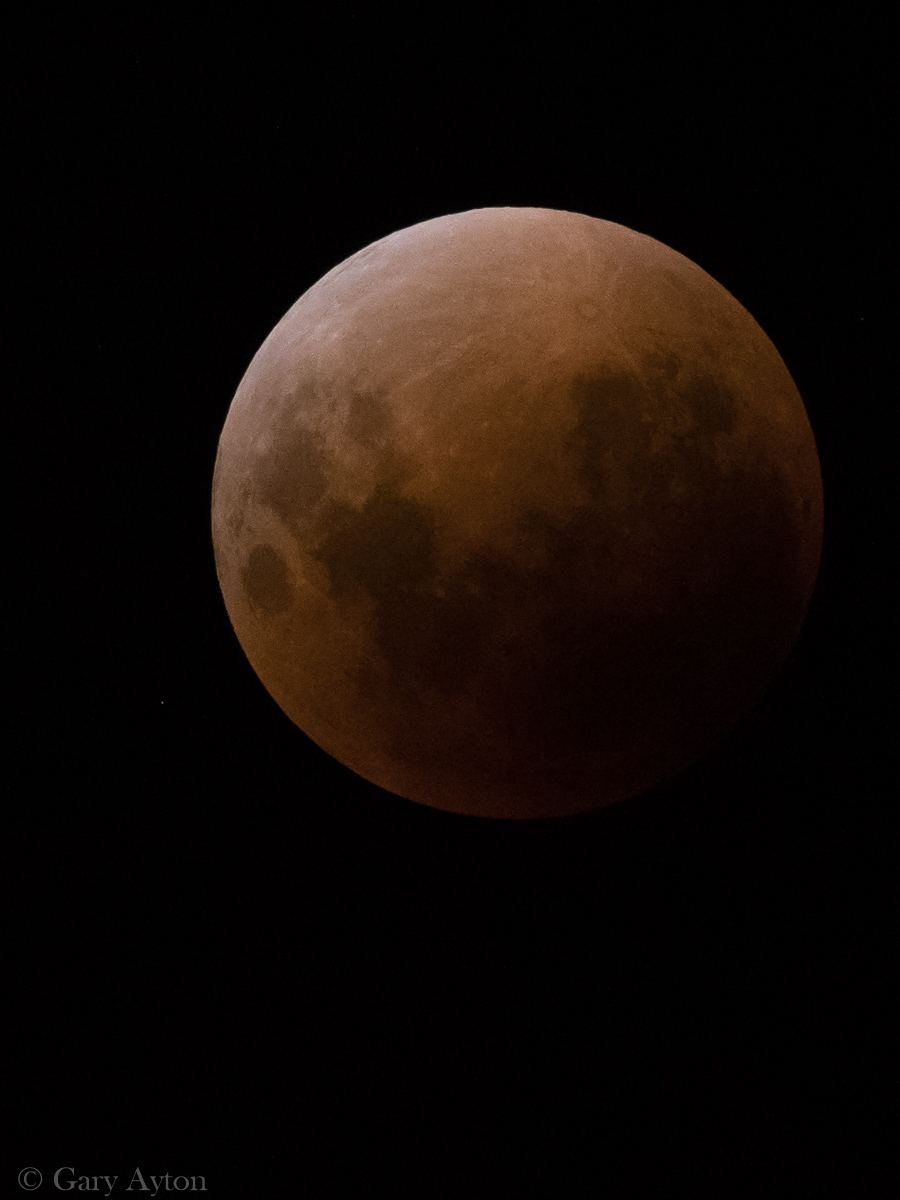
Lunar eclipse Feb 2018 with the Olympus mZD 300mm f/4 lens - see my blog post
Introduction
- photographing a total eclipse of the moon can be challenging:
- there is little contrast and so autofocus and even manual focus can be difficult
- if it is near the horizon at totality, it is even darker with less contrast, plus atmospheric disturbances reduces any ability to capture lunar details well
- you need a good quality telephoto lens (at least 200mm focal length in full frame terms, and more like 800mm or more if you want to capture just the moon rather than a landscape or seascape with the moon)
Suggested settings
- capture in RAW file
- white balance set to sunny day
- manual exposure
- manual focus unless your camera will reliably autofocus on a nearby star
- tripod unless you have a really good image stabiliser and a wide aperture lens
- high quality lens of the focal length desired for the type of image you wish to achieve
- consider using the best aperture for sharpness, exposure duration (keep it relatively short to avoid earth rotation blur at high magnifications) and if including landscape or seascape, sufficient depth of field (DOF)
- if using a tripod, use a self timer to reduce camera shake with shutter mode in 1st curtain electronic, and if using a dSLR you should also put it into mirror lock up and Live View mode
- actual exposure will be determined by the degree of eclipse and the altitude of the moon:
- partial phase:
- if exposing for the bright area, ISO 200, f/8, 1/250th-1/500th sec but may need ISO 400, f/4, 1/40th sec if cloudy,or low in the sky
- ISO 1600 at f/4, 1/8th sec if exposing for the shadow area and blowing out the sunlit area
- turquoise phase:
- f/4 at ISO 800, 1/10th sec
- totality
- ISO 1600, 1/5th sec at f/4